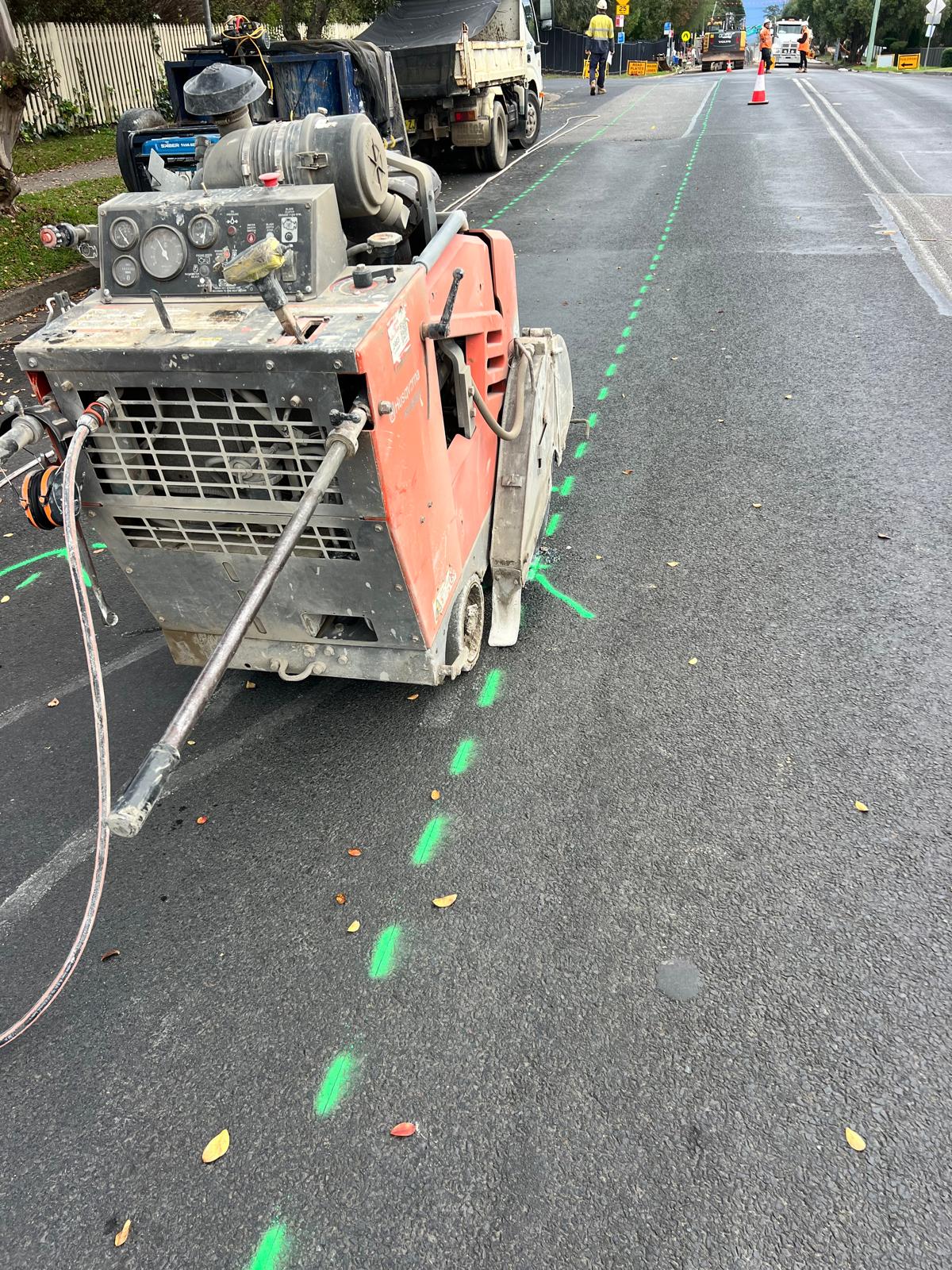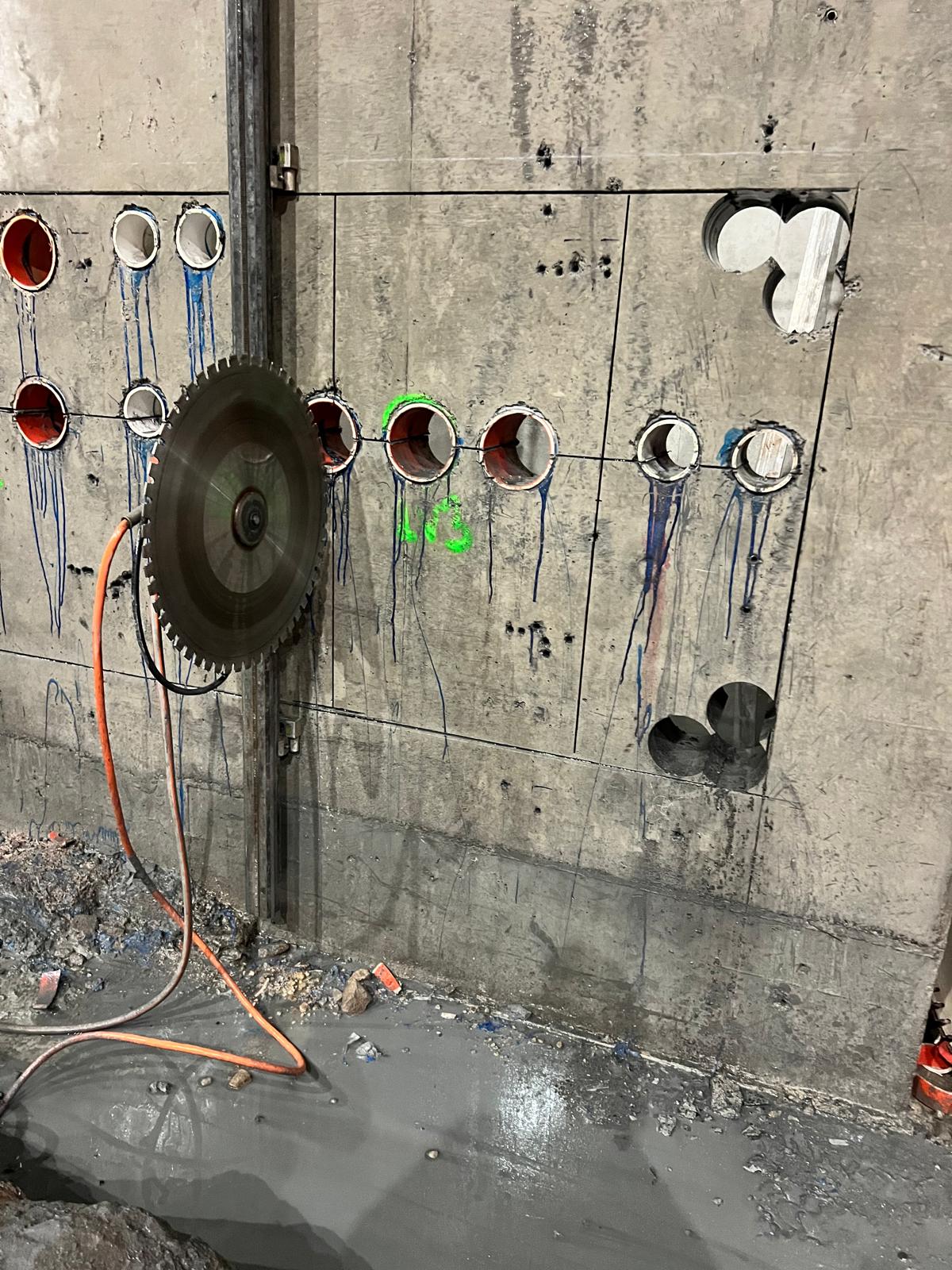
Specialist Ring Sawing Across Sydney
Why Choose Ring Sawing for Restricted Access and Detailed Cuts
Ring sawing is the go-to method for deep, accurate cuts in confined areas where space rules out conventional saws. The blade and motor arrangement allows plunge cutting and keeps corner overcut to a minimum. It is ideal for slab penetrations, precast element openings and precise edge trimming, giving a level of control that standard hand saws often cannot match.
Get in Touch for Pricing and Site Assessment
Email drawings, photos and site notes so ALL CORE can check dimensions, material thickness, reinforcement and access. From there we will recommend the right equipment and method for your needs.
What Is Ring Sawing?
Design and Function of the Handheld Diamond Ring Blade
Ring sawing uses a handheld saw fitted with a diamond-tipped circular ring blade that sits around the motor. The design permits plunge cuts that reach deeper than many traditional handheld saws and makes it easier to achieve sharp, square corners. The result is a cleaner, more predictable cut profile.
Advantages of Ring Sawing Over Conventional Hand Saws
Ring saw blades reduce corner overcut and minimise chipping, so finishes are neater and more exact. The shape improves access and operator control in tight spots. Maximum cutting depths depend on machine size and site conditions, but ALL CORE deploys industry-grade equipment to meet project requirements safely and efficiently.
When Ring Sawing Is the Right Method
Suitable Applications: Thick Concrete, Walls, Floors, and Precast Elements
Ring sawing is well suited to cutting thick concrete or masonry walls and floors found in commercial and infrastructure jobs, especially when a full-depth cut is needed from one side. It also works well for precast concrete elements and for finishing follow-up cuts after rough sawing.
Ideal Conditions: Tight Access and Square Corners
When a square-cornered opening and minimal overcut are priorities, or when the workspace is too tight for larger saws, ring sawing is often the best choice. It excels at detailed edge work that demands accuracy.
Ring Sawing vs Hand Sawing: Choosing the Best Tool for Your Site
Comparison Table: Depth, Precision, Access, and Portability
| Feature | Ring Sawing | Hand Sawing |
|---|---|---|
| Typical Cutting Depth | Deeper cuts, including plunge cuts | Shallower surface cuts |
| Access | Excellent for tight or restricted spaces | Best suited to open areas and slabs |
| Precision | High precision, with cleaner edges and less overcutting | Moderate precision, with a greater risk of chipping |
| Corner Finish | Square corners with minimal overcutting | Rounded corners or slight overcutting |
| Portability | Compact and handheld | Handheld, with varying equipment sizes |
| Best Use | Deep, precise cutting in confined areas | Surface cutting and general trimming |
Site and Equipment Factors Influencing Method Selection
Cut depth, site access, finish quality and material type determine whether ring or hand sawing is the better approach. ALL CORE reviews these elements alongside reinforcement layout to recommend the safest, most cost-effective method.
Common Ring and Hand Sawing Applications in Sydney Projects
Door and Window Openings
Creating square, clean openings in reinforced concrete walls for doors and windows often requires ring sawing to preserve the surrounding concrete and reinforcement.
Slab and Wall Modifications
Slab penetrations for services and structural wall alterations benefit from the controlled cuts that both ring and hand sawing provide.
Confined Areas and Concrete Pipe Work
In tight riser cupboards, narrow corridors or around existing pipework, ring sawing makes detailed cuts possible without dismantling adjacent structures.
Confined and Restricted-Access Cutting Considerations
Defining Confined Spaces Versus Restricted Access
ALL CORE distinguishes legally defined confined spaces, which need trained personnel and strict controls, from restricted access areas. Work in confined spaces proceeds only after site controls, ventilation, rescue measures and permits are verified.
Operational Safety: Ventilation, Power Source, and Permits
For indoor or restricted work, electric or hydraulic saws help manage fumes and noise. Wet cutting suppresses dust, and slurry is collected and disposed of professionally. All operations comply with relevant safety requirements and permits.
How ALL CORE Plans and Executes Your Concrete Cut
Drawing Review and Structural Set-Out
We start with a careful review of drawings to locate reinforcement, embedded services and structural constraints, avoiding surprises on site.
Choosing the Optimal Sawing Method
ALL CORE selects between ring, hand, wall or wire sawing based on site specifics and cut requirements, balancing safety, accuracy and cost.
Slurry and Waste Management for Clean Site Handover
Slurry and debris are controlled throughout the job, keeping the site tidy and ready for handover with minimal disruption.
Materials, Depths and Site Requirements for Ring and Hand Sawing
Concrete Types and Reinforcement Considerations
Ring and hand sawing can cut concrete, reinforced concrete, masonry, brick and precast stone when confirmed. The presence and position of reinforcement influence blade choice and cutting technique.
Equipment Limitations Based on Access and Cut Depth
Cut depth is a function of blade diameter, machine power and available workspace. Some cuts need access from both sides to finish, while ring sawing can often achieve full depth from one side.
Why Choose ALL CORE for Your Ring Sawing Needs in Sydney
Experience, Safety Accreditation and 24/7 Availability
ALL CORE operators bring more than a decade of experience and hold certifications including confined space training and Safe Work Method Statements. Our team is available 24/7 to meet tight project schedules.
Comprehensive Sydney and NSW Coverage With Expert Communication
We serve commercial, civil and infrastructure clients across Sydney and NSW, prioritising clear communication and reliable, planned delivery.
Ring Sawing FAQs
Typical Cutting Depths and Reinforced Concrete Capability
ALL CORE’s ring saw equipment can achieve verified cutting depths from one side, suitable for most reinforced concrete walls and floors. Exact depths vary by machine and site and are confirmed for each job.
Managing Dust, Noise, Water, and Slurry
Wet cutting controls dust effectively, and slurry is collected for professional disposal. Electric and hydraulic saws reduce noise and fumes, which is important for indoor work.
Access Requirements and Corner Finishing
Ring sawing produces clean, square corners with minimal overcut, which is critical for precise openings in confined areas.
Differences Between Hand and Ring Saw Techniques
Ring sawing enables deeper, more precise cuts and better corner control. Hand sawing suits shallower surface cuts and trimming work.
Preparing Drawings and Information for Accurate Quotes
Marked-up drawings or photos with material type, thickness, reinforcement, access and timing help ALL CORE provide fast, accurate pricing.
Request a Ring Sawing Quote From ALL CORE Sydney
What Information to Provide for Fast, Accurate Pricing
Send detailed drawings or images, cut dimensions, material and reinforcement details, and access measurements.
Book Us For Your Ring Sawing Requirements
Call 0452 454 160 or email info@allcore.com.au to discuss your ring sawing needs. Our team will guide you from quote through to completed cutting.